
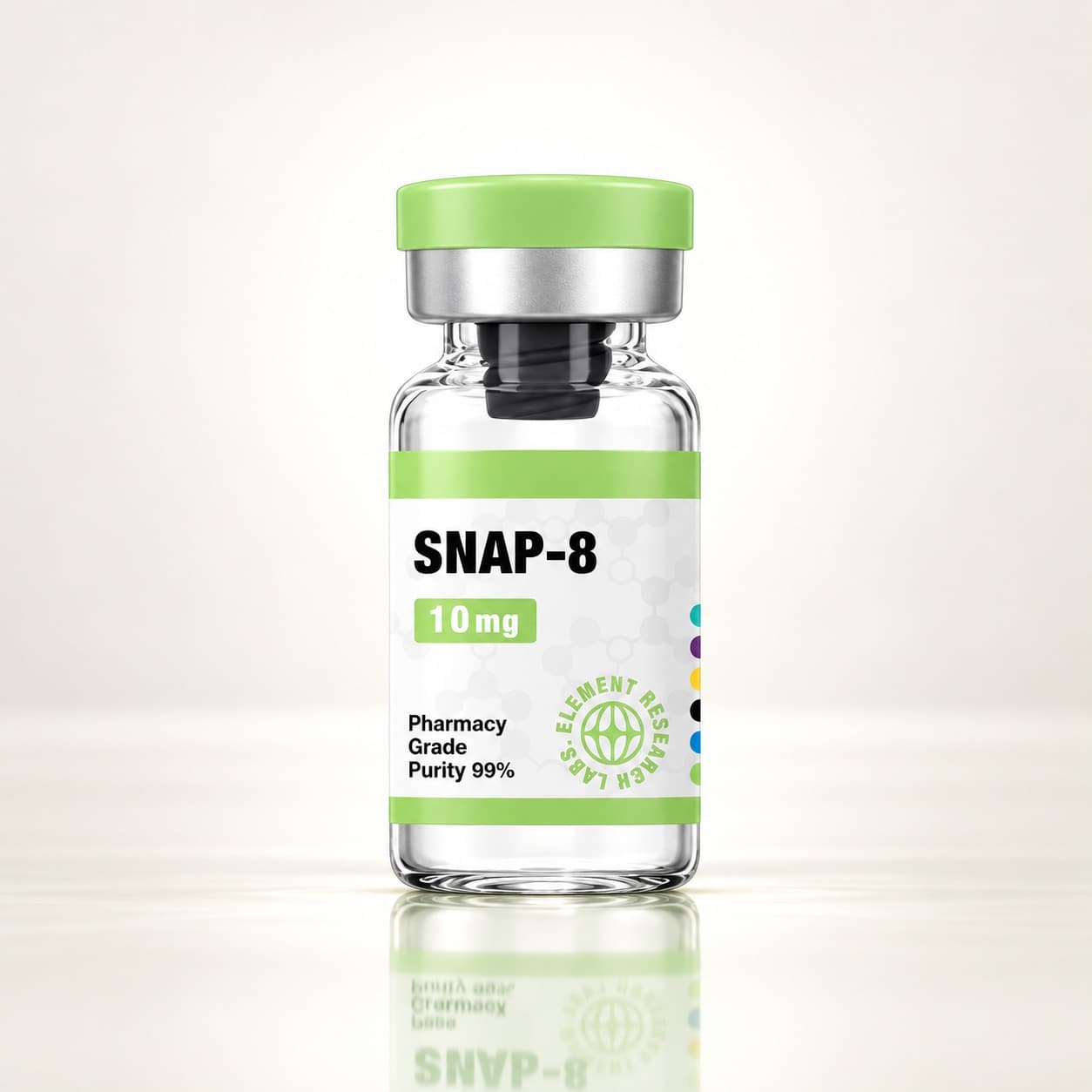
SNAP-8
Acetyl Octapeptide-3
Acetyl octapeptide-3 studied for its interaction with the SNARE complex
1 × $30 = $30. Applied in your cart.
- Every batch tested by an independent laboratory — identity by HPLC and mass spec.
- Dispatched on business days once payment has cleared. Free shipping over $100 — flat $10 otherwise.
- Discreet packaging, tracked and insured on every shipment.
For laboratory and research use only · Not for human consumption
- Certificate
- Record in preparation
- Molecular weight
- 888.0 g/mol
- Form
- Lyophilised powder, sealed glass vial
- Storage
- Cool, dry and dark; refrigerate once reconstituted
What we test, every batch.
Each production lot of SNAP-8 is analysed by an independent laboratory before it ships. Its certificate is not in our published archive yet — we won't link one we don't hold.
Certificates we have publishedThe panel, every batch
- Identity
- HPLC + mass spec
- Purity
- HPLC · figure on the batch COA
- Net peptide content
- HPLC
- Heavy metals
- ICP-MS
- Sterility
- PCR
- Endotoxin
- USP <85>
What it is
SNAP-8, also catalogued as acetyl octapeptide-3, is an eight-residue acetylated peptide developed as an elongated analogue of the shorter acetyl hexapeptide sequence used in cosmetic-science research. Its design mimics the N-terminal end of SNAP-25, one of the three proteins that assemble into the SNARE complex, and that mimicry is the entire basis of its use as a laboratory tool.
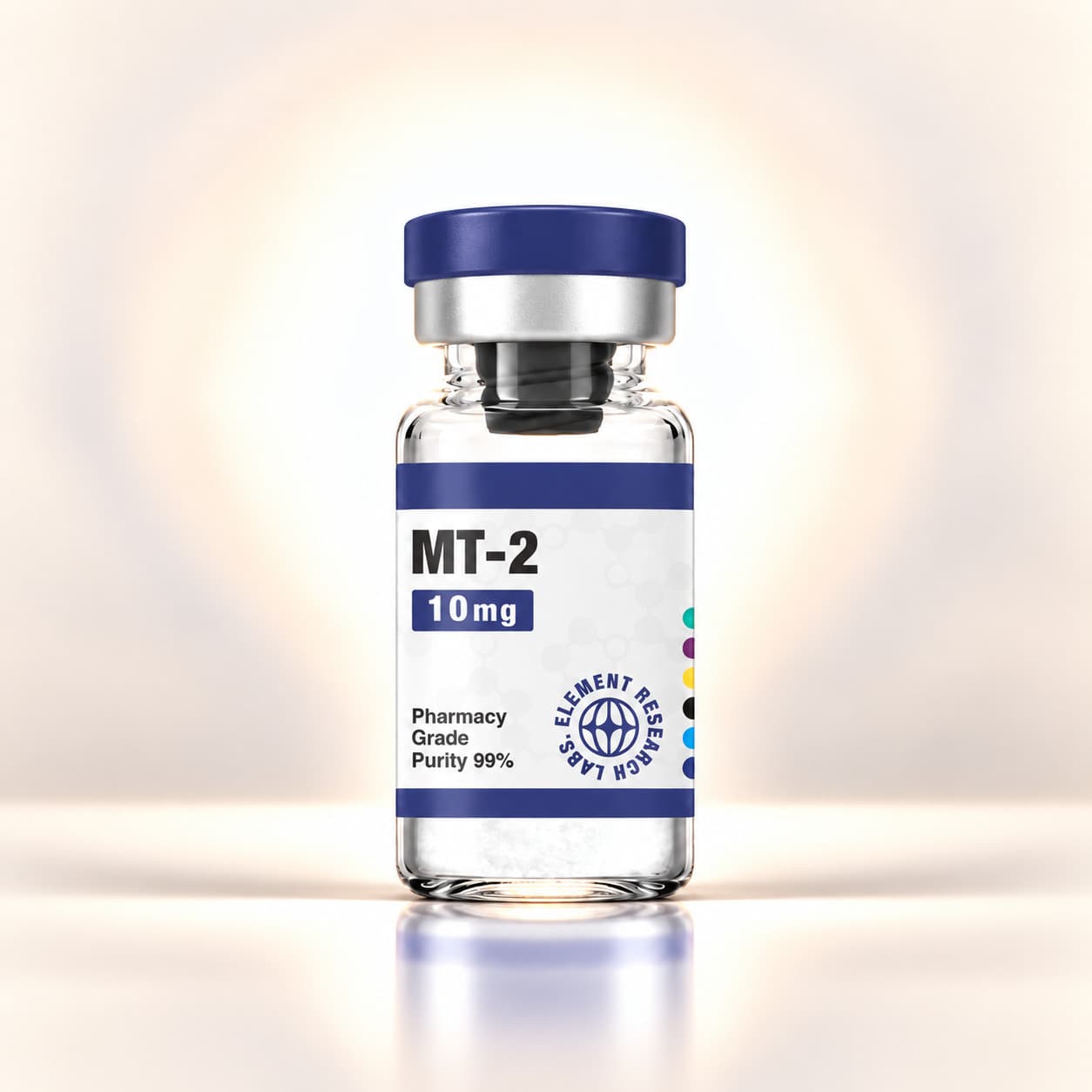
It ships as a lyophilised powder in a sealed 10 mg glass vial. Each lot is accompanied by a Certificate of Analysis documenting identity and purity. Supplied as a laboratory reference material for research use only, and not for human or veterinary use.
What the research explores
SNAP-8 is studied for how a short peptide can interfere with a protein-protein assembly step. Published investigation covers:
- Competitive interaction with SNAP-25 during SNARE complex assembly in vitro
- Effects on calcium-triggered vesicle docking and catecholamine release in cell models
- Comparative behaviour against the shorter acetyl hexapeptide analogue
- Peptide penetration and stability in reconstructed skin models used in cosmetic-science research
- Analytical characterisation of the acetylated octapeptide sequence
These describe laboratory research topics only. No cosmetic, dermatological or physiological outcome is claimed or implied. Elements DNA supplies this material for in vitro and preclinical research use.
Questions
How should the vial be stored?
Keep the sealed vial cool, dry and away from light until opened. Once reconstituted, store refrigerated and treat the solution as short-lived. Avoid repeated freeze-thaw cycles, which degrade peptide integrity.
How is the lyophilised powder reconstituted?
Solvent is normally added slowly down the inside wall of the vial and dissolved by swirling rather than shaking. Solvent, working concentration and protocol are the decision of the researcher. We do not provide dosing or administration guidance.
What does the Certificate of Analysis cover?
The batch COA records compound identity and chromatographic purity for your specific lot, with its lot identifier and test date. It is a laboratory characterisation document, not a clinical or regulatory approval.
What arrives in the shipment?
One sealed 10 mg glass vial of lyophilised powder in protective packaging, labelled with its batch identifier. Solvent and other laboratory consumables are not included.
Products are supplied strictly for laboratory and research use. They are not for human or veterinary consumption, and have not been evaluated by the U.S. Food and Drug Administration for the diagnosis, treatment, cure, or prevention of any condition.