
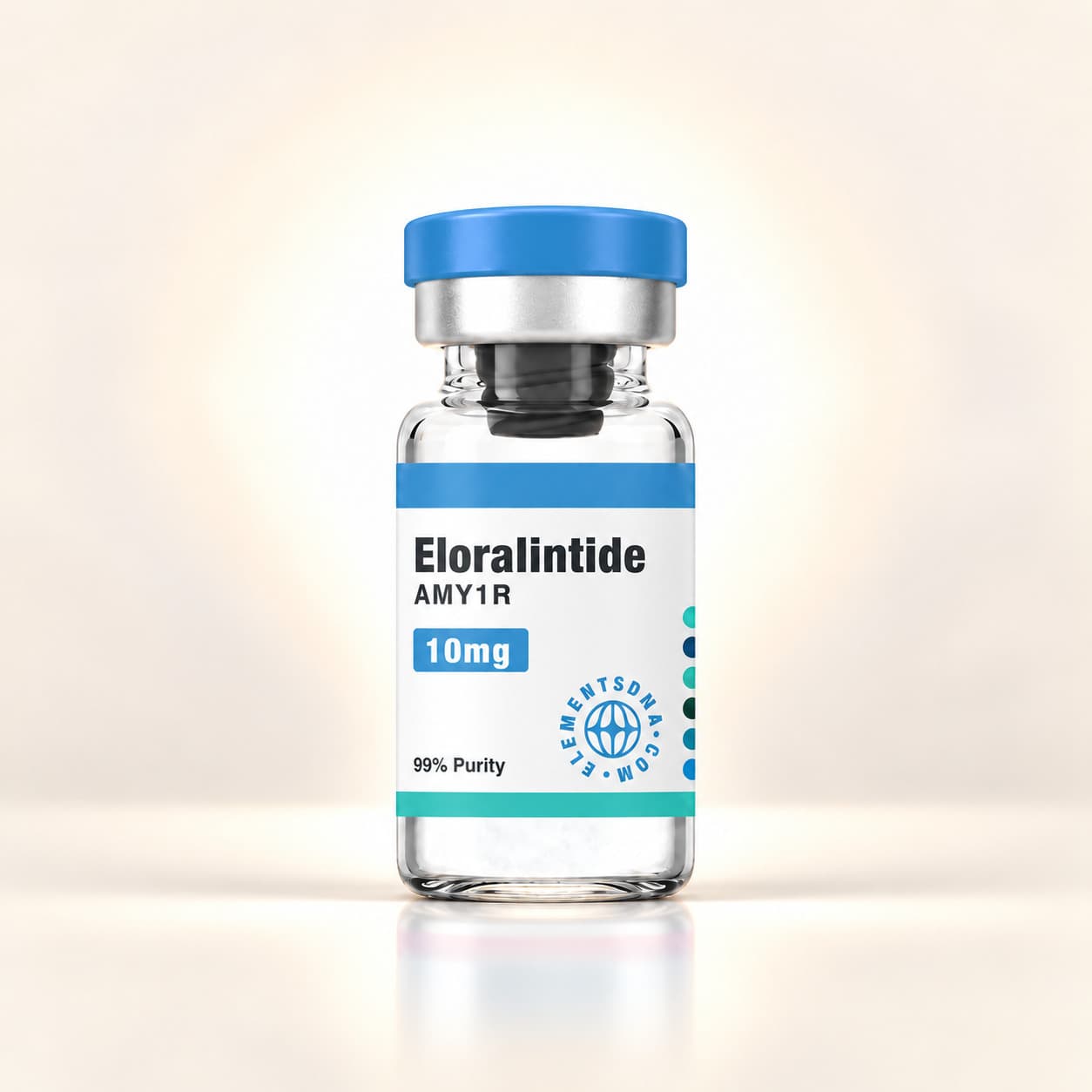
Elora (AMY1R)
Selective long-acting amylin receptor agonist, lyophilized
1 × $100 = $100. Applied in your cart.
- Every batch tested by an independent laboratory — identity by HPLC and mass spec.
- Dispatched on business days once payment has cleared. Free shipping over $100 — flat $10 otherwise.
- Discreet packaging, tracked and insured on every shipment.
For laboratory and research use only · Not for human consumption
- Certificate
- Record in preparation
- Class
- Synthetic amylin receptor agonist peptide
- Form
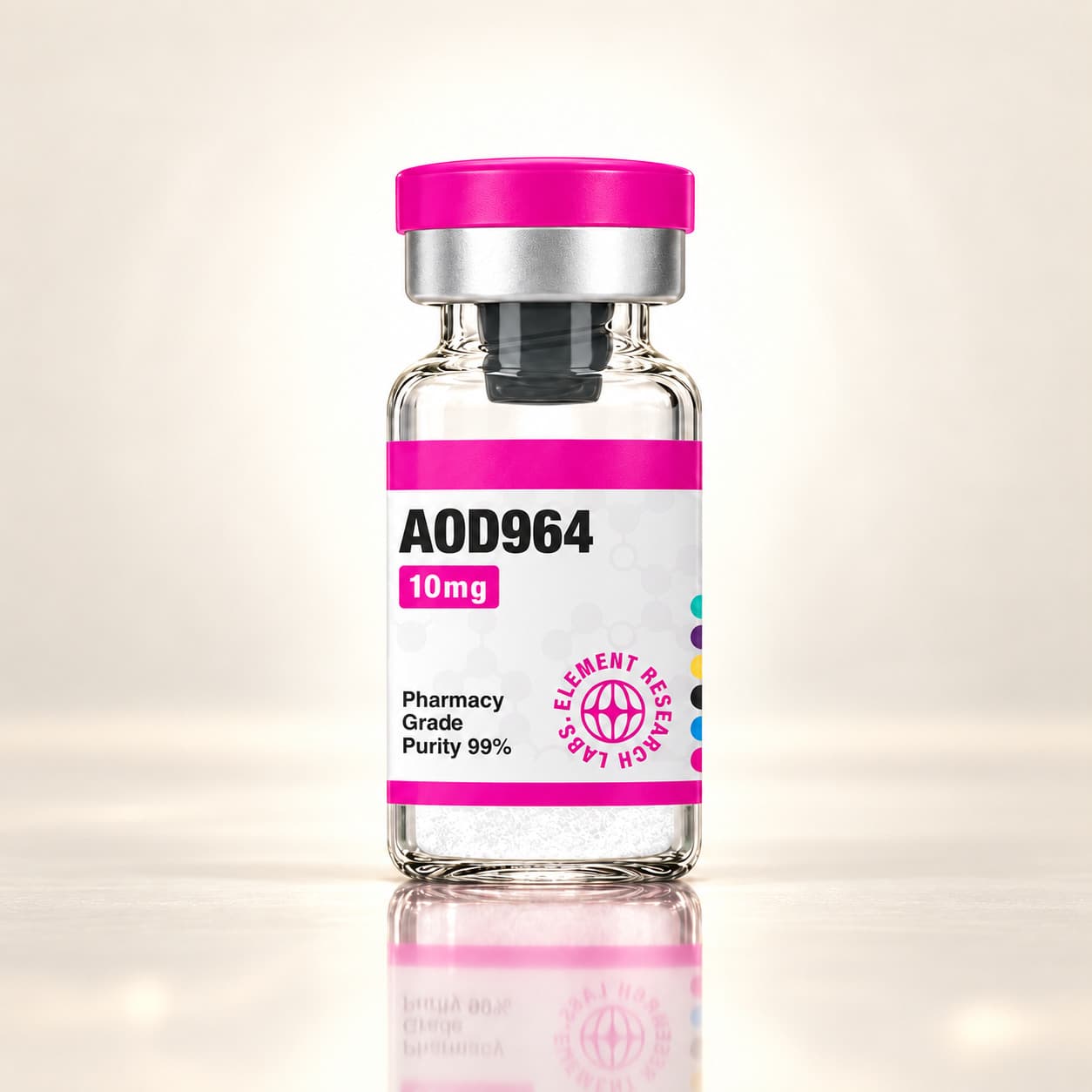
- Lyophilized powder, sealed glass vial
- Storage
- Dry, cold and sealed
What we test, every batch.
Each production lot of Elora (AMY1R) is analysed by an independent laboratory before it ships. Its certificate is not in our published archive yet — we won't link one we don't hold.
Certificates we have publishedThe panel, every batch
- Identity
- HPLC + mass spec
- Purity
- HPLC · figure on the batch COA
- Net peptide content
- HPLC
- Heavy metals
- ICP-MS
- Sterility
- PCR
- Endotoxin
- USP <85>
What it is
Elora (AMY1R) is a synthetic peptide agonist selective for the amylin receptor — the AMY1R complex that forms when the calcitonin receptor associates with receptor-activity-modifying protein 1 (RAMP1). That pairing is what distinguishes an amylin receptor from a bare calcitonin receptor, and selectivity between the two is the central design problem for this class.
Native amylin is a 37-residue pancreatic peptide that aggregates readily and clears quickly. Engineered agonists in this class are sequence-modified to resist aggregation and to extend circulating half-life, which is what makes them usable over the longer time courses a study needs. Shipped as a lyophilized powder in a sealed glass vial, stored dry until reconstituted. Supplied for laboratory research use only.
What the research explores
Amylin-receptor pharmacology is an active preclinical field. Areas of study include:
- Receptor selectivity — discriminating AMY1R, AMY3R and the unmodified calcitonin receptor, which share a subunit and overlap substantially in ligand response.
- RAMP-dependent pharmacology — how an accessory protein reshapes the binding pocket of a class B GPCR.
- cAMP signaling readouts as the standard measure of receptor activation in cell-based assays.
- Satiety and energy-balance circuitry in preclinical models, studied at the level of receptor distribution and neuronal signaling.
- Aggregation biophysics — why native amylin forms amyloid fibrils and which substitutions prevent it.
These are research areas. We make no claim about outcomes in any organism.
Questions
How should the vial be stored?
Sealed and cold as a dry powder. Peptides in this family are aggregation-prone, so avoid agitation after reconstitution and minimise freeze-thaw cycles.
What does AMY1R refer to?
The amylin receptor subtype formed when the calcitonin receptor pairs with RAMP1, an accessory protein that changes the receptor binding profile. It is a receptor designation, not a brand.
What does the Certificate of Analysis cover?
Identity and purity for the batch as determined by the testing lab, tied to the lot on the vial. It characterizes the material rather than clearing it for any application.
What arrives in the box?
One sealed glass vial of lyophilized powder, labelled with compound and lot. No diluent is included.
Products are supplied strictly for laboratory and research use. They are not for human or veterinary consumption, and have not been evaluated by the U.S. Food and Drug Administration for the diagnosis, treatment, cure, or prevention of any condition.