
Reconstitution calculator.
A lyophilised compound arrives as a solid mass. Adding a known volume of solvent turns it into a solution of a known strength. This works out that strength, and the volume of solution that holds any mass you name.
It is a dilution calculator and nothing else — concentration arithmetic on a mass and a volume. It does not make recommendations of any kind, and no output here is guidance on use.
The mass of lyophilised solid stated on the vial.
Bacteriostatic water or another sterile diluent.
This calculator assumes the solid dissolves completely and adds no measurable volume of its own. That assumption is standard for milligram-scale lyophilised peptides and is what makes the arithmetic below a simple ratio.
5mg/mL
- Same value in µg/mL
- 5,000
- Total solution
- 2 mL
Any mass you want to measure out of the solution above.
—
Needs a concentration and a target mass.
Works back from the strength you want to the volume to add.
—
Needs a vial mass and a target concentration.
Three ratios. No hidden steps.
Everything above is one of these three. They are written out so the tool can be checked rather than trusted.
mg ÷ mL = mg/mL
Vial contents divided by the solvent volume added. A 10 mg vial in 2 mL of solvent gives 5 mg/mL.
mg ÷ (mg/mL) = mL
Target mass divided by the concentration. At 5 mg/mL, 0.25 mg sits in 0.05 mL — that is 50 µL.
mg ÷ (mg/mL) = mL
Vial contents divided by the concentration you want. A 20 mg vial at 10 mg/mL needs 2 mL of solvent.
Quick reference, in mg/mL.
Common vial masses against common solvent volumes. Same arithmetic as above, precomputed.
| Vial | + 1 mL | + 2 mL | + 3 mL |
|---|---|---|---|
| 5 mg | 5 | 2.5 | 1.667 |
| 10 mg | 10 | 5 | 3.333 |
| 15 mg | 15 | 7.5 | 5 |
| 20 mg | 20 | 10 | 6.667 |
| 30 mg | 30 | 15 | 10 |
The solvent side of the ratio.
The volume you enter above has to come from somewhere. These are the three diluents we stock — preserved water in two presentations, and a sealed single-use solvent.
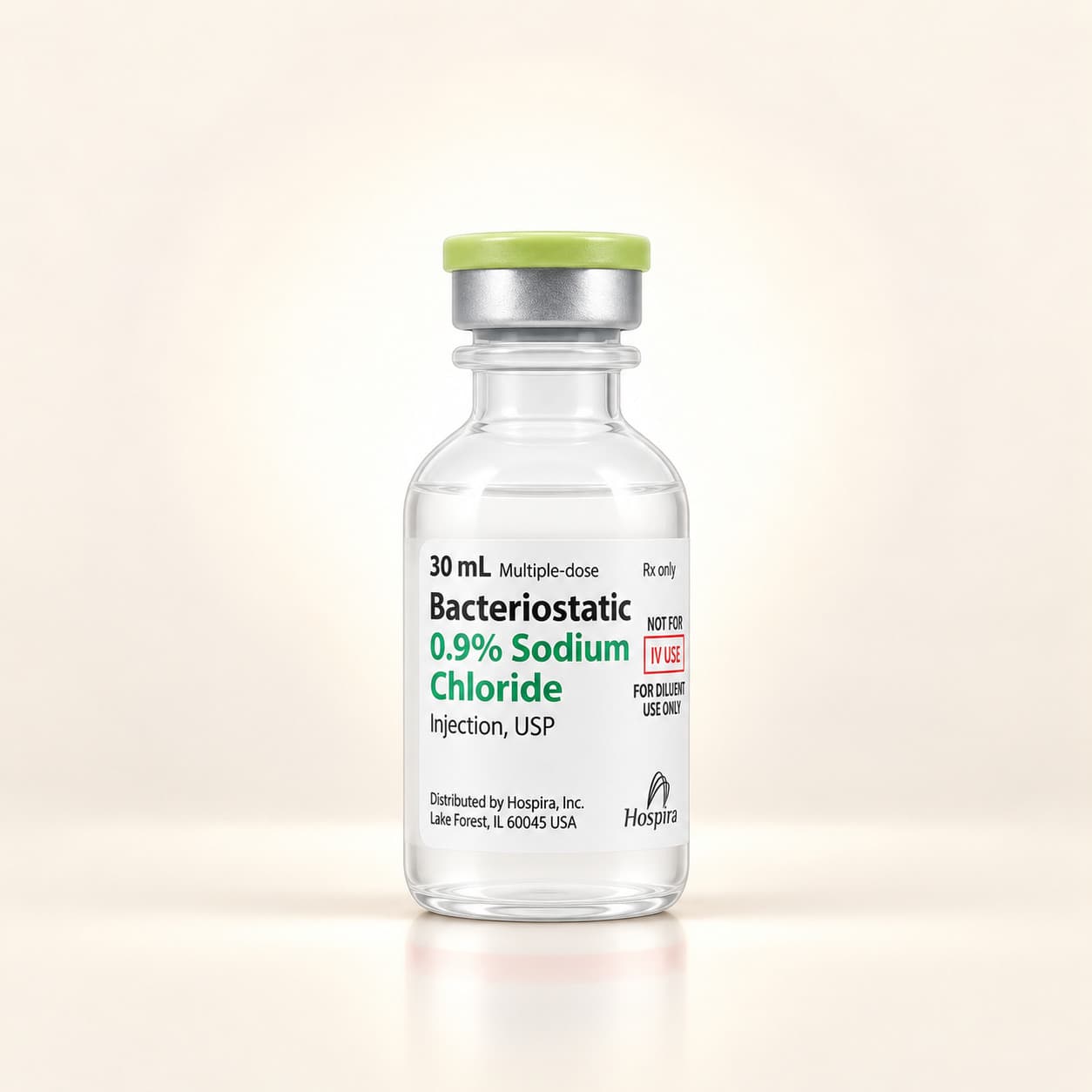
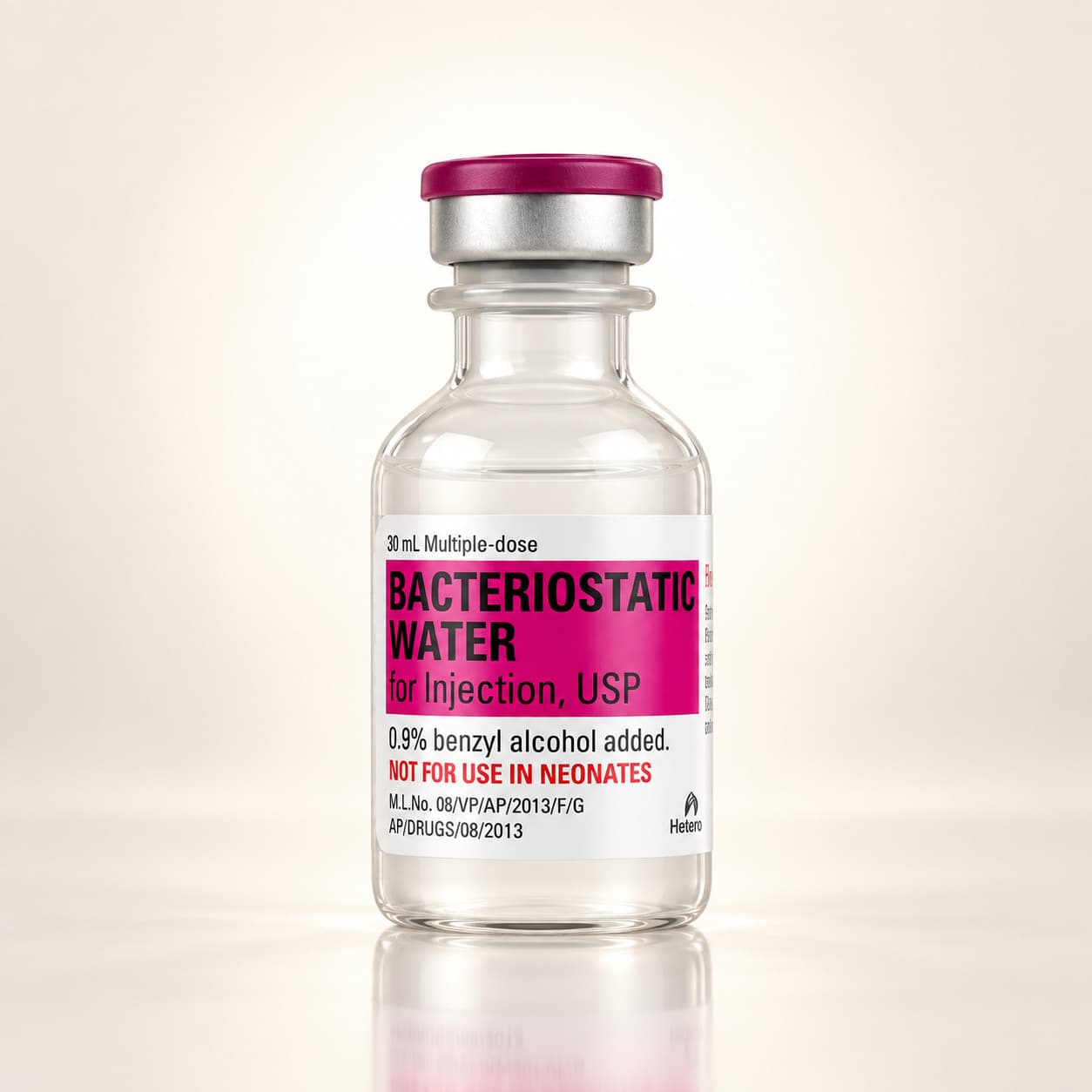
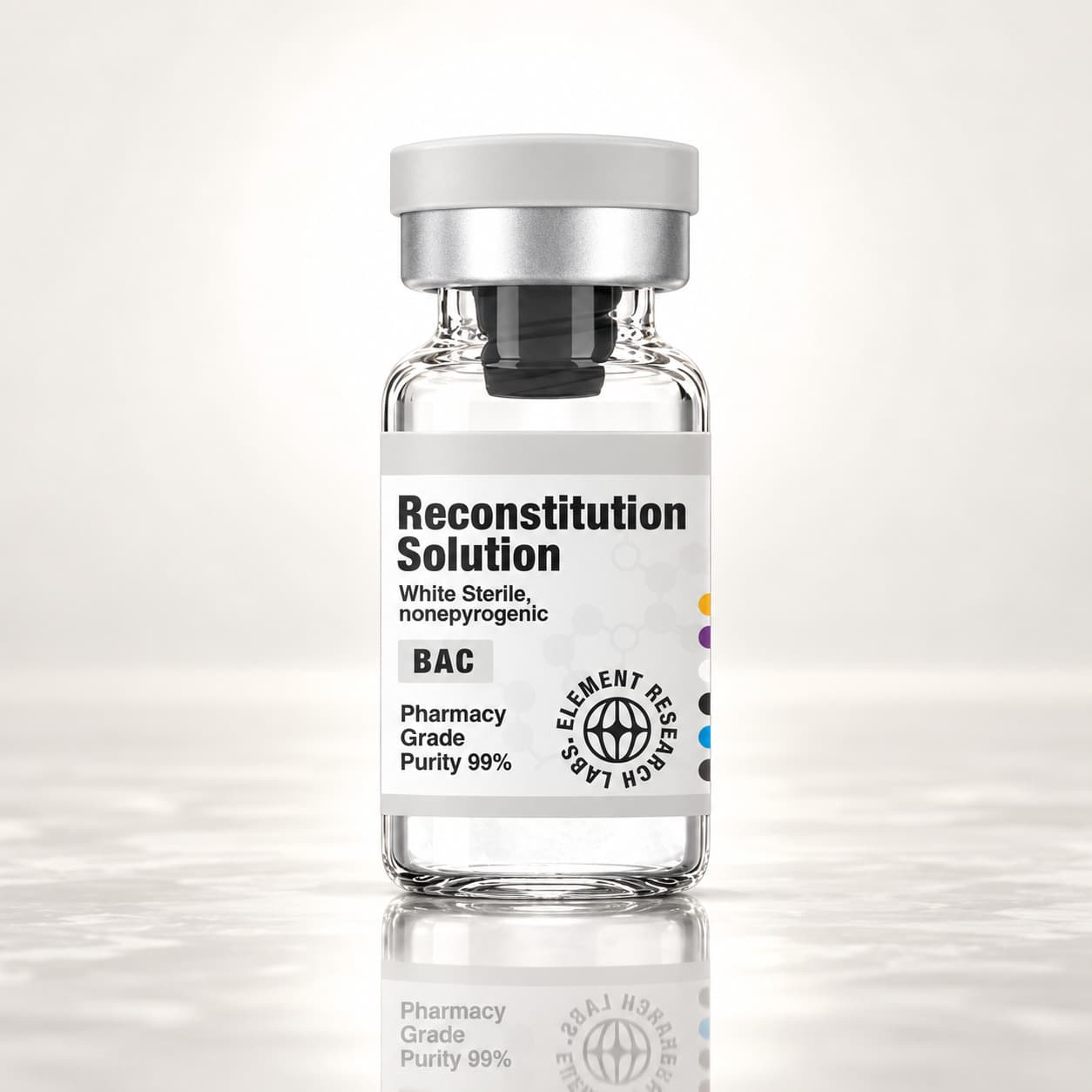
Bacteriostatic water is sterile water preserved with 0.9% benzyl alcohol, which is what allows a vial to be entered more than once. Reconstitution solution is an unpreserved single-use solvent. Which one belongs with a given compound is a question for the protocol you are working to, not for us.
For laboratory and research use only · Not for human consumption
Questions
What does the reconstitution calculator do?
It converts between vial mass, solvent volume and resulting concentration — the arithmetic of a dilution, nothing more. It does not recommend a volume, a strength or an amount, because those are functions of a study rather than of a vendor.
Which solvent should the calculator's volumes be measured in?
The calculator is unit-agnostic: it works in millilitres of whatever diluent is used. Bacteriostatic water and reconstitution solution are both stocked under supplies.